
Wait! Before You Go…
Stay connected and get the latest insights in contract management!
Visit our LinkedIn Page to join a community of professionals and stay updated on industry trends, best practices, and expert tips from Contractmanagement.online.

The pre-negotiation phase is the foundation that lays the groundwork for the entire contract management process. It determines the trajectory of contract negotiations, the agreed-upon terms, and even the deal’s success or failure.
A poorly executed pre-negotiation phase can create both short- and long-term issues. It could drain an organization’s resources, waste valuable time, and result in less-than-ideal agreements. Ultimately, it could even entangle an organization in disputes and tarnish business reputation.
What’s involved in a successful pre-negotiation contract phase, and how is it executed? Read on for details.
The pre-negotiation phase of the contract lifecycle – often referred to as the preliminary or preparatory stage – is one of the first steps in successful contract negotiations. It ensures that an organization’s tech, teams, and workflows are ready for the process.
This early, pre-signature phase of contract setup is deal-agnostic — meaning that the technology and workflows used should apply to any contract, regardless of its purpose. This is often a priority phase for legal teams responsible for creating the first version of the contract and managing its revisions.
Application administrators (who manage the software tools and systems) and contract requesters (who initiate the need for a contract based on business requirements) usually manage the pre-negotiation phase.
Together, they’ll oversee this phase’s three basic elements:
Information and communication gaps between departments often create challenges within the pre-negotiation phase. Here are a few we see most commonly:
If your pre-negotiation process isn’t well planned – or if it’s skipped altogether – engaging in contract negotiations could be like playing a game without knowing the rules. Chances are, the outcome won’t be favorable.
Preparation is key to securing satisfactory contract terms and building lasting partnerships. Without it, misunderstandings, conflicts, delays, and less-than-ideal deals become more likely. You could even face strained partner relationships and a damaged business reputation.
Establishing clear communication channels, refining request processes, and investing in user-friendly contract management tools can create an effective pre-negotiation phase and set the stage for a positive outcome in negotiations.
One of the best ways to avoid the challenges mentioned above is to automate pre-negotiation tasks. It eliminates much of the mundane and time-consuming manual work, letting your team focus on strategic negotiations instead of drowning in paperwork.
Contract automation also reduces the chance of inaccuracies, ensuring you don’t lose crucial details in the shuffle.
But the real magic for automation at the pre-negotiation level is scalability. As your organization grows, automated systems effortlessly handle increased contract volumes without missing a step.
Crafting an optimal pre-negotiation process through automation involves strategic steps that align with organizational and team dynamics. Through the following calibrated steps, automation becomes the backbone of a pre-negotiation process that you tune to your organization’s and team’s unique needs.
Many contract management platforms include features that support the pre-negotiation phase of the contract lifecycle. However, those powered by AI can streamline this phase. Here’s what to look for:
Read more about AI capabilities for CLM throughout the full lifecycle.
Successful contract negotiations begin with a well-planned pre-negotiation phase that covers application administration, clear contract requesting, and meticulous contract creation. Automating pre-negotiation with AI-driven CLM software can streamline your workflows and use data to identify trends and uncover opportunities.
There is so much involved in the lifecycle of a contract beyond the pre-negotiation phase. We know how important it is to look at your business holistically – why not your contracts too?
Luckily, we outlined the entire process for you and how each phase works together, including where generative AI steps in to play a role. Get a copy of the report here. You’ll be mastering CLM in no time!
Author: Sirion
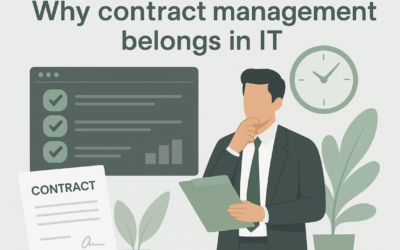
Have you ever been caught off guard by a contract renewal… that nobody remembered?

Contracts are fundamental to human civilization, enabling structured collaboration, accountability, and progress. Their development over millennia reflects the evolving complexity of societies, economies, and...

Top 10 reasons procurement wants a CLM—and why every function should demand it (with AI’s Game-Changing Role)